CAA Suite
A desktop app where AI agents take social-media videos from script to publishing.
- I designed and built it
- KVRA Agency's in-house tool
- August – November 2026
- TypeScript · Electron · React · Claude Agent SDK · MCP (JSON-RPC) · Supabase · pnpm · Vitest · Python · ffmpeg · Electron Builder
The challenge
Good AI video for social media takes research, scripting, generation, review, editing and publishing, and every generation costs money. Done by hand, that doesn't scale to several channels and brands at once.
What I built
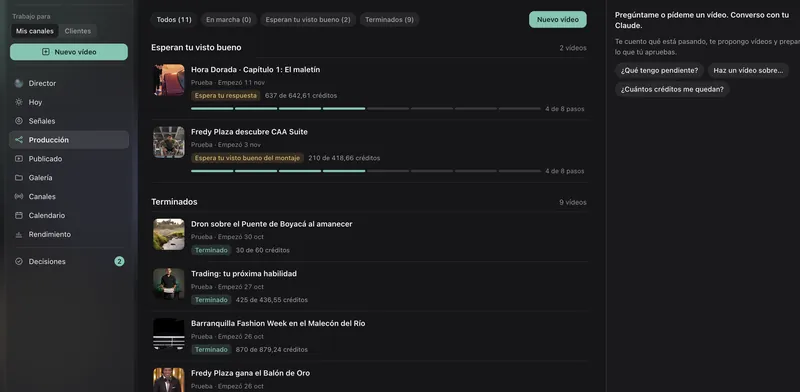
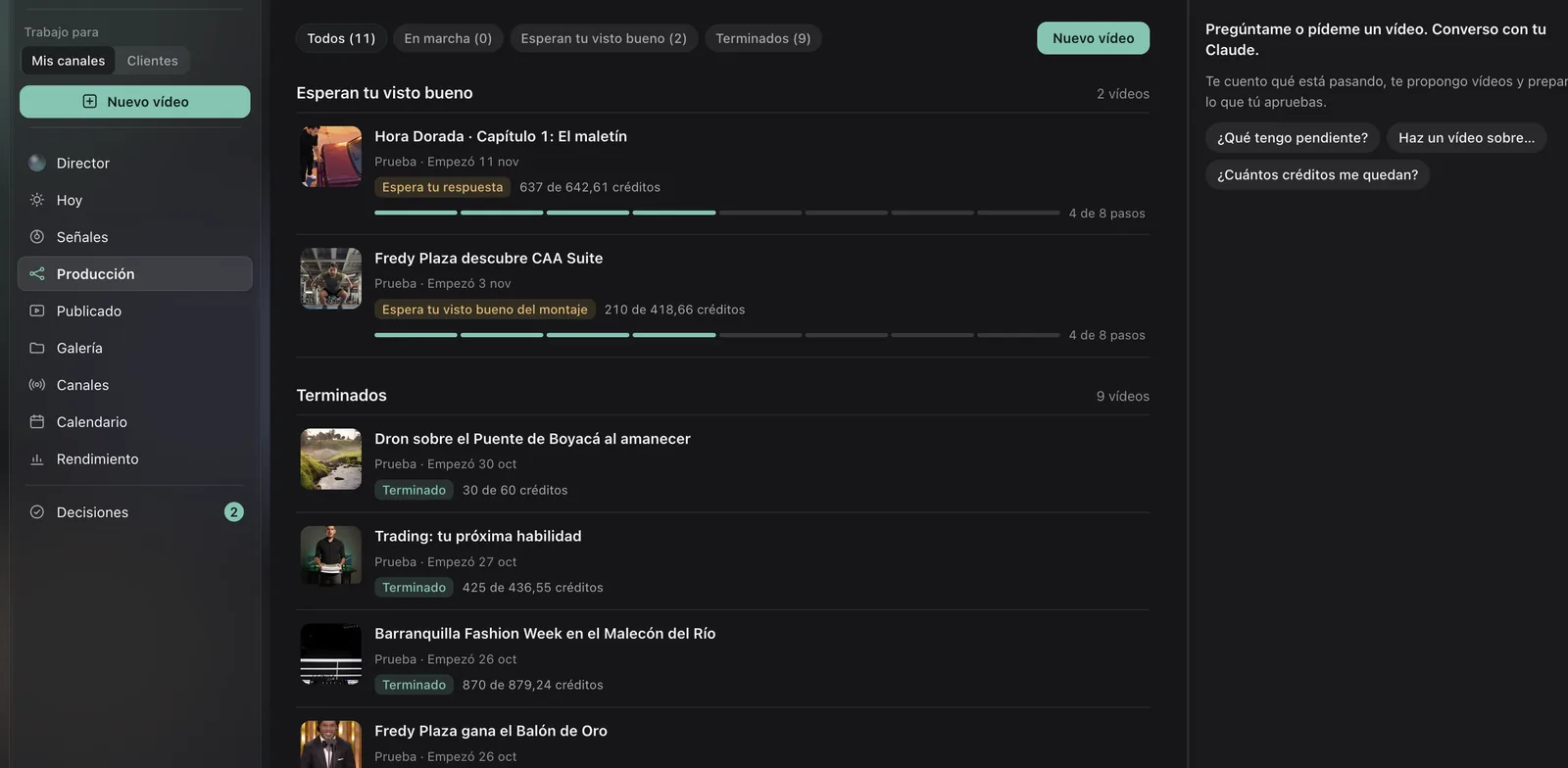
Built with Electron, React and the Claude Agent SDK. I talk to a Director agent, which coordinates the other agents and uses 60 tools to take each video from script to publishing on YouTube, Instagram and TikTok. Nothing that costs money goes out without approval first. It grew out of a Claude Code proof of concept I made for a client.
Videos
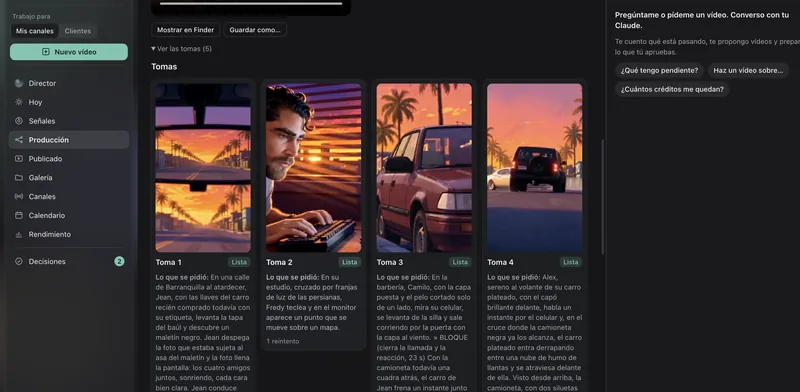
Hora Dorada, chapter 1: CAA Suite scenes, edited with CAA Films
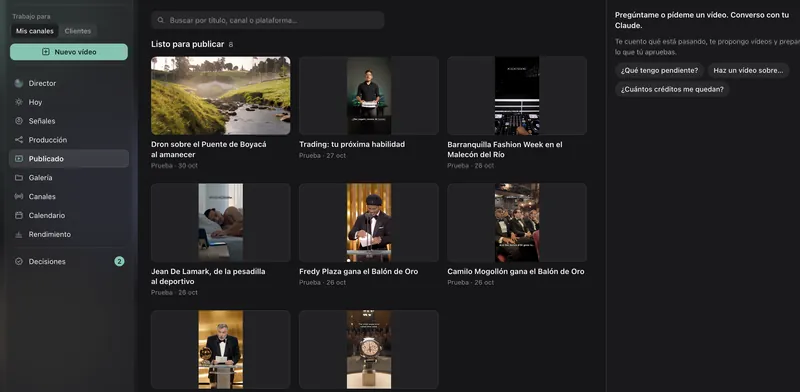
Barranquilla Fashion Week on the Malecón del Río
A partner wins the Ballon d'Or with FC Barcelona
A partner, from nightmare to sports car
The Patek Philippe Grandmaster Chime: the 31-million watch
From cracked floor to resin aquarium
Chili oil noodles in one take
Abandoned pool: from swamp to blue
A miniature city that lights up
POV: a luxury mountain chalet
POV: a day of luxury in Egypt
What stands out
- Every paid call needs approval first. The app shows the maximum cost, reserves it, blocks duplicate submissions and records each approval.
- MCP servers I wrote by hand on JSON-RPC, with no SDK, that give the Director its 60 tools.
- A Supabase backend (Edge Functions and SQL migrations) controls permissions and spending.
- Tested at every level: unit, end-to-end, accessibility and visual regression.
- Installers for macOS and Windows with Electron Builder.
- Two modes. Channels works for any kind of video, vertical or horizontal; Business is where clients review and approve.
- Since November 2026 its engine has an optional production step: the generated scenes are edited with CAA Films, my method for editing video by code.
By the numbers
- 12days from first code to a working version in testing
- 60tools for the Director agent
- 25packages in the pnpm monorepo
- 10,000+automated tests
Screens
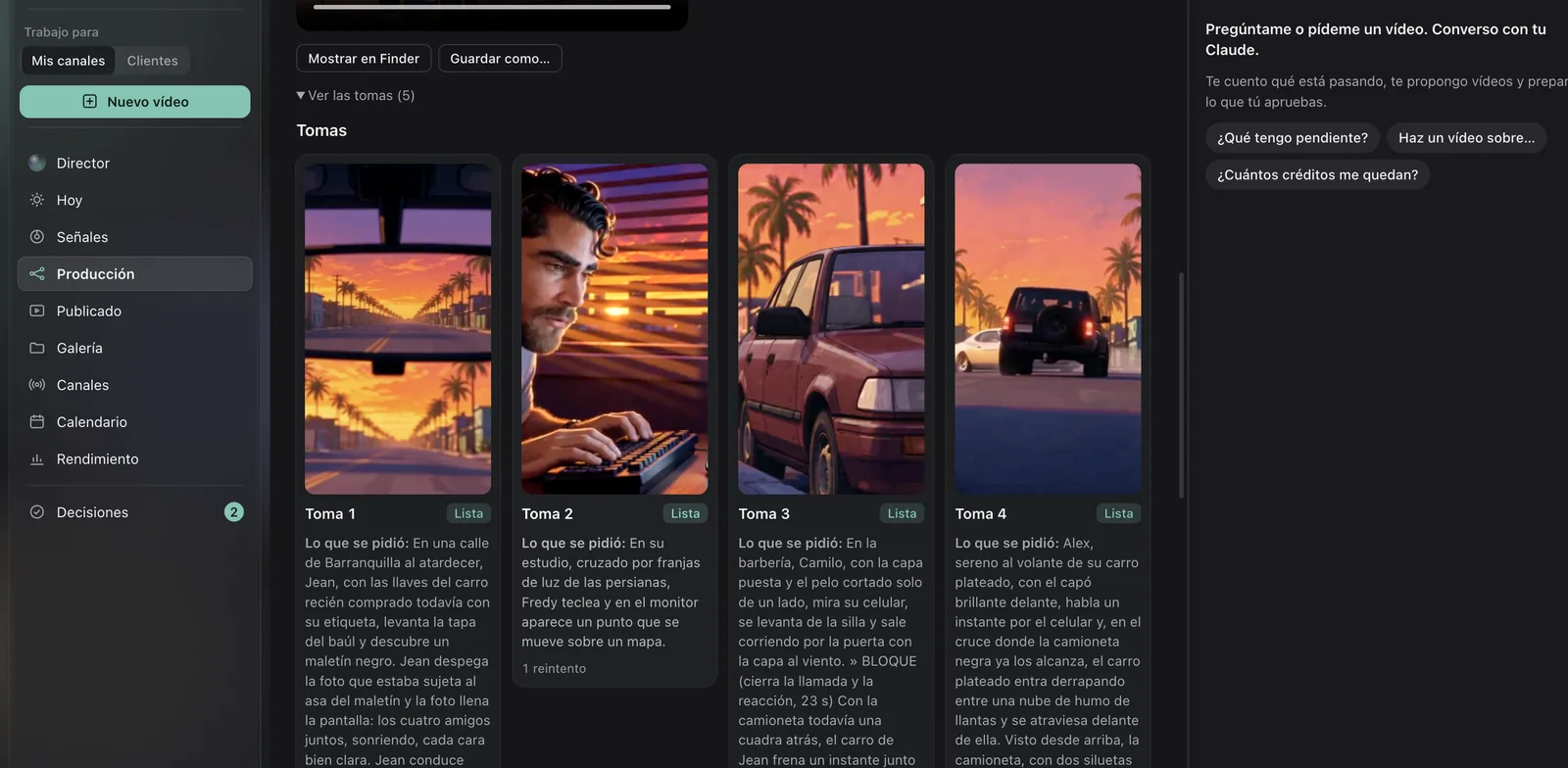
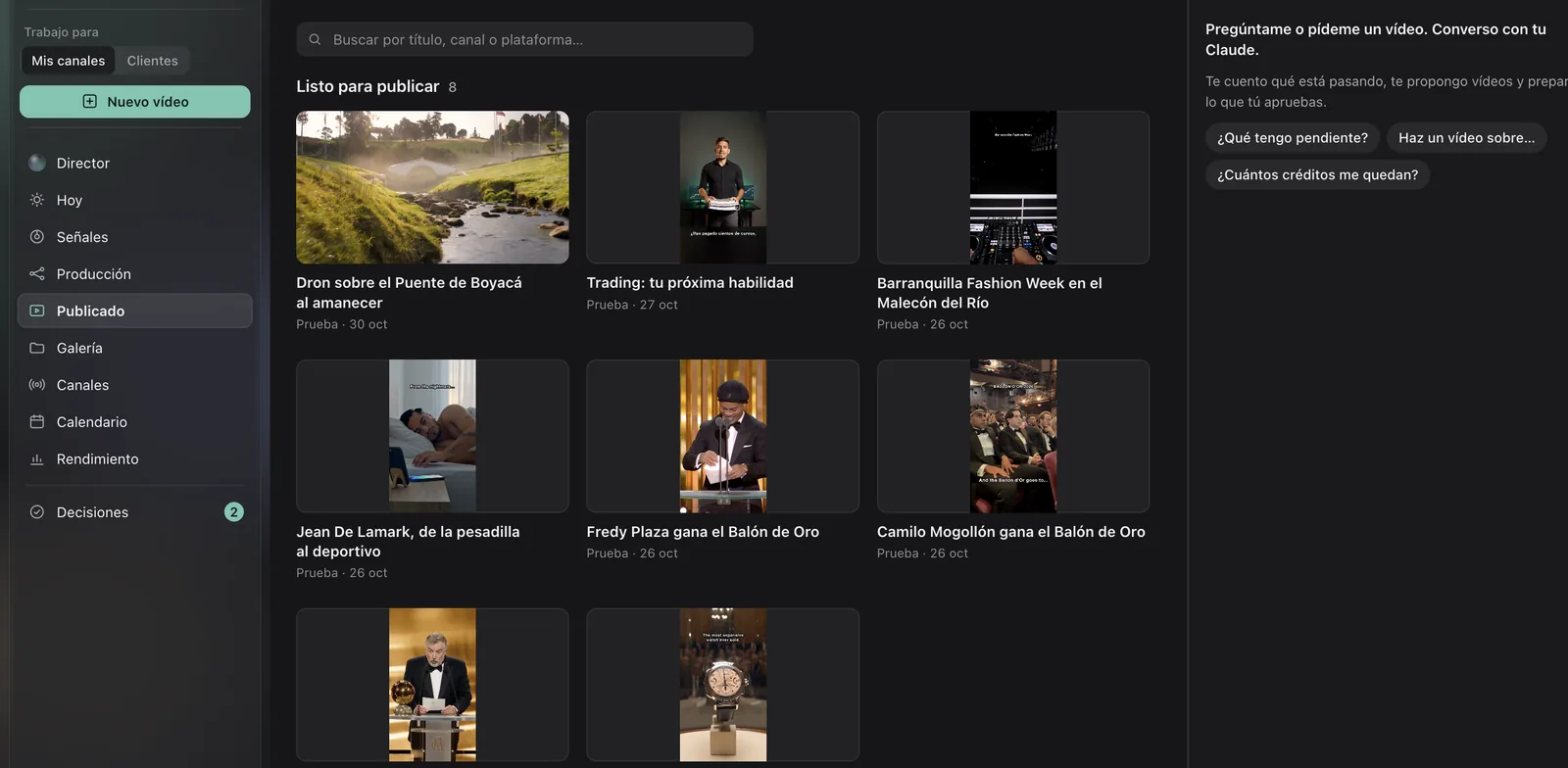
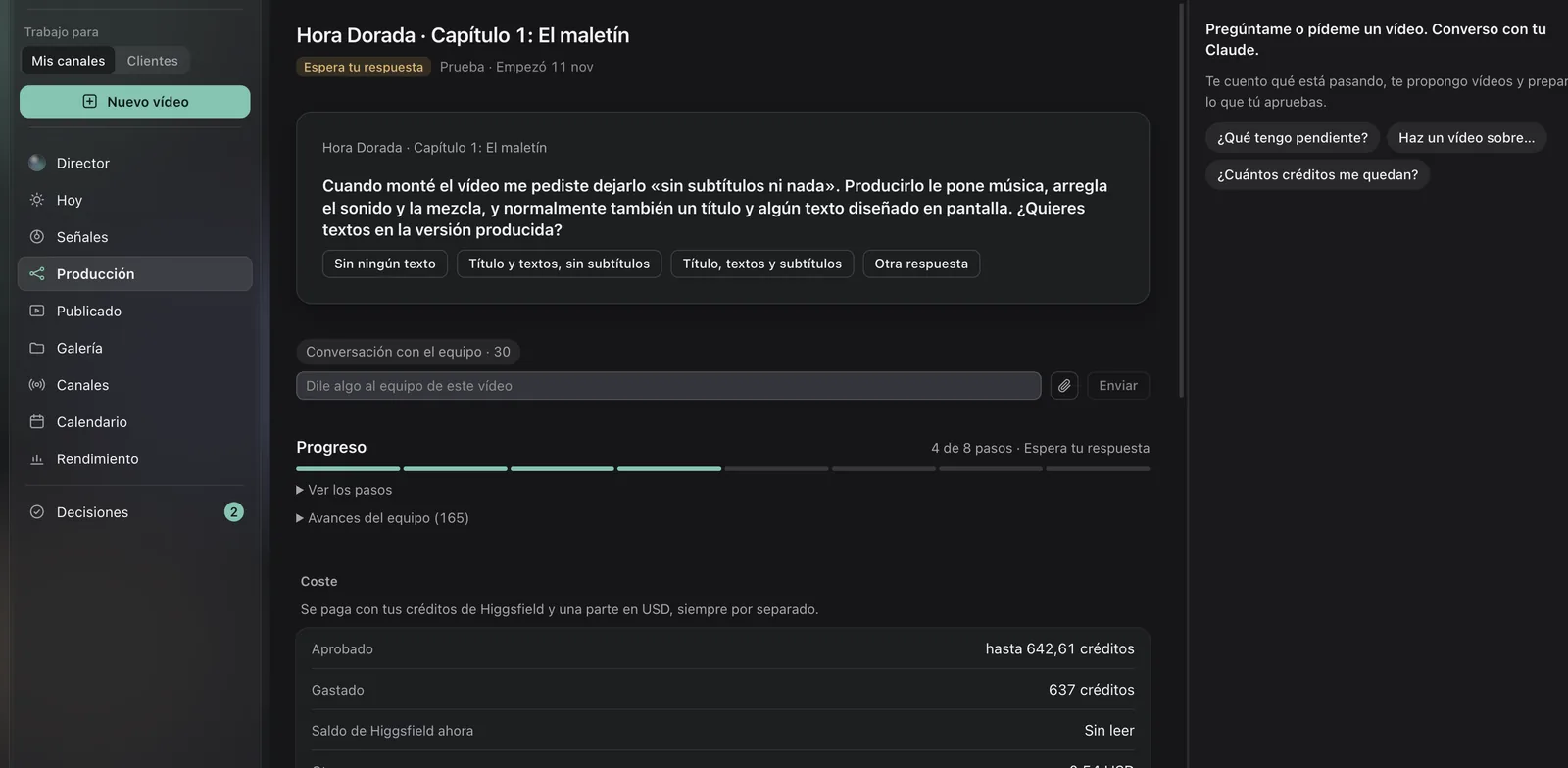
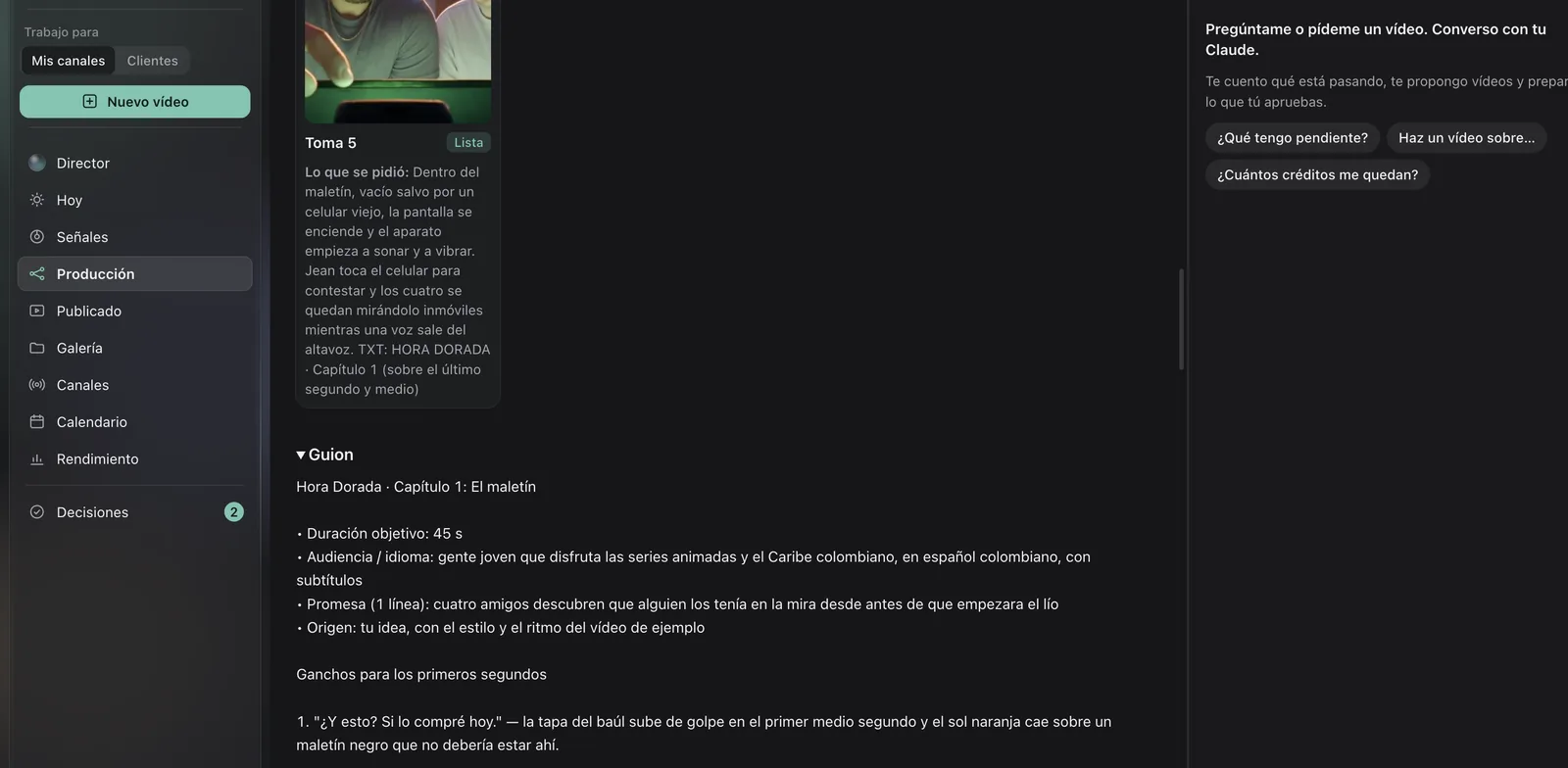
Under the hood
- A brief
- Director agent
- 60 tools
- Spend approval
- YouTube
- TikTok
- Supabase
- Image
- Video
- Voice
An Electron and React desktop app in a 25-package pnpm monorepo. The agents run on each user's own machine. A Supabase backend controls permissions and spending: it reserves the money before anything is sent, blocks duplicate submissions and records every approval. The Director reaches its 60 tools through MCP servers I wrote by hand on JSON-RPC, with no SDK. Editing, subtitles and quality checks run automatically. Electron Builder packages it for macOS and Windows. The video engine also runs on its own, inside Claude Code, and is already at work on real projects.
Built with KVRA Orquesta From first code to a working version in testing in 12 days, with every piece reviewed before I moved on.
Editing by code
CAA Films
My method for Claude to edit and produce video by code, for people who will never open an editor.
- I designed the method and its tools, and directed the build
- November 2026
- Python · NumPy · SciPy · ffmpeg · Claude Code · Gemini · pytest · Swift
AI already generates scenes, but a video that works is edited: cuts on the music, text you can read, sound where it belongs. CAA Films is brand new: for now it is only in my own KVRA Orquesta kit and in CAA Suite's engine, as an optional production step. Hora Dorada, the first of the Videos above, is CAA Suite scenes edited with it.
It has three parts. The method is the order of work and the craft rules: eleven steps, where the person decides by looking at images and listening to sketches. The tools are a Python package that reads frames, composes, sets type, mixes sound, measures and verifies. And each video is designed from scratch: nothing of its look is reused in the next one.
- The person judges by watching: first a storyboard of stills, then a sketch over the music, and only then is anything animated.
- Before delivery the tools check the final file by the numbers: sync at every hit of the music, loudness, safe zones and consecutive frames.
- Claude sees still frames but cannot hear a video or watch it in motion, so a Gemini model backs it up: it watches and listens to the finished piece and points at flaws. Only what the person approves is applied.
- The steps that cost money (transcription, upscaling, the final critique) wait for approval, with the price shown first.
- 11steps, from the brief to the video's record
- 5days from the first commit to being installed in my kit
Under the hood
The engine is Python that computes every frame, with ffmpeg to read, encode and join. Every parameter that changes how a video looks or sounds is required and passed by name: the tools have no default look.
Fast tests run in memory; slow ones run ffmpeg on clips of three seconds at most. The expected result comes from constructed material or a hand count, never from the code under test.
Each video's state lives on disk, so another session can continue it from its folder.